

When Nobody’s Watching
Why the recognition that matters most is the kind you haven’t earned yet

I. The List
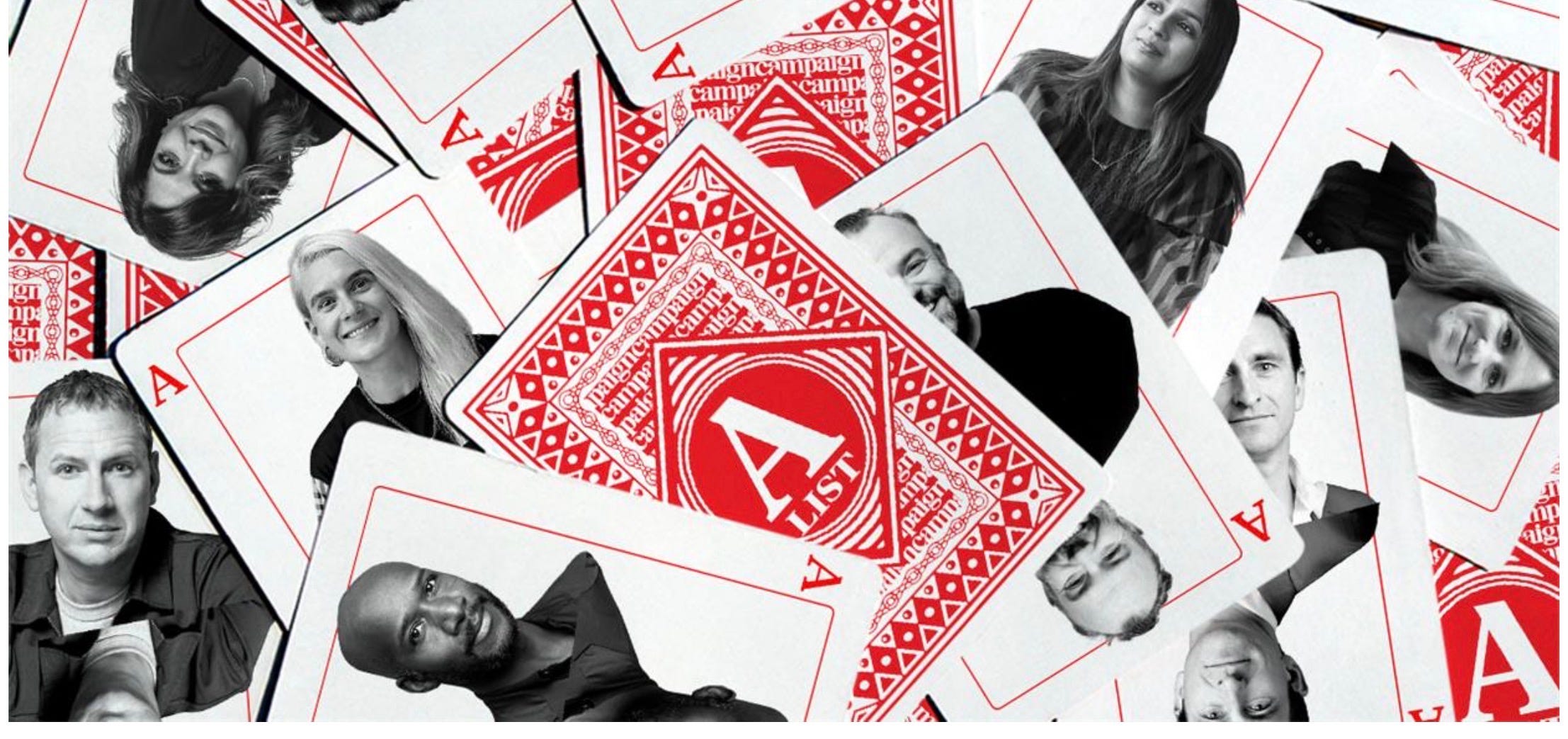
I’m back on the Campaign A-list.
There. I’ve said it. And yes, I know how that sounds. A grown woman, 52 years old, two businesses deep into a reinvention that terrifies her most Tuesdays, getting misty-eyed about a list in a trade magazine. But stay with me, because this isn’t the story you think it is.
This isn’t about ego. Well, not entirely. This is a story about visibility, about who gets seen and when, about what recognition means when you’re no longer standing behind a logo the size of a building. And it starts, as all the best stories about advertising do, in a university library in 1994 with a girl who had absolutely no idea what she was doing.
II. The Library
I wanted to work in marketing. That much I knew. The problem was, I had roughly the same understanding of available careers as I did of quantum physics. Which is to say: I knew the words existed.
If you grew up without the right networks, without a parent who could ring someone at Saatchi’s or a family friend at Unilever, you’ll know exactly what I mean. The careers service was, if I’m being generous, underwhelming. If I’m being honest, it was pretty shit. And yes, fine, I probably missed a careers fair or two because I was busy doing what 21-year-olds do, which is have fun and pretend deadlines are a concept that applies to other people.
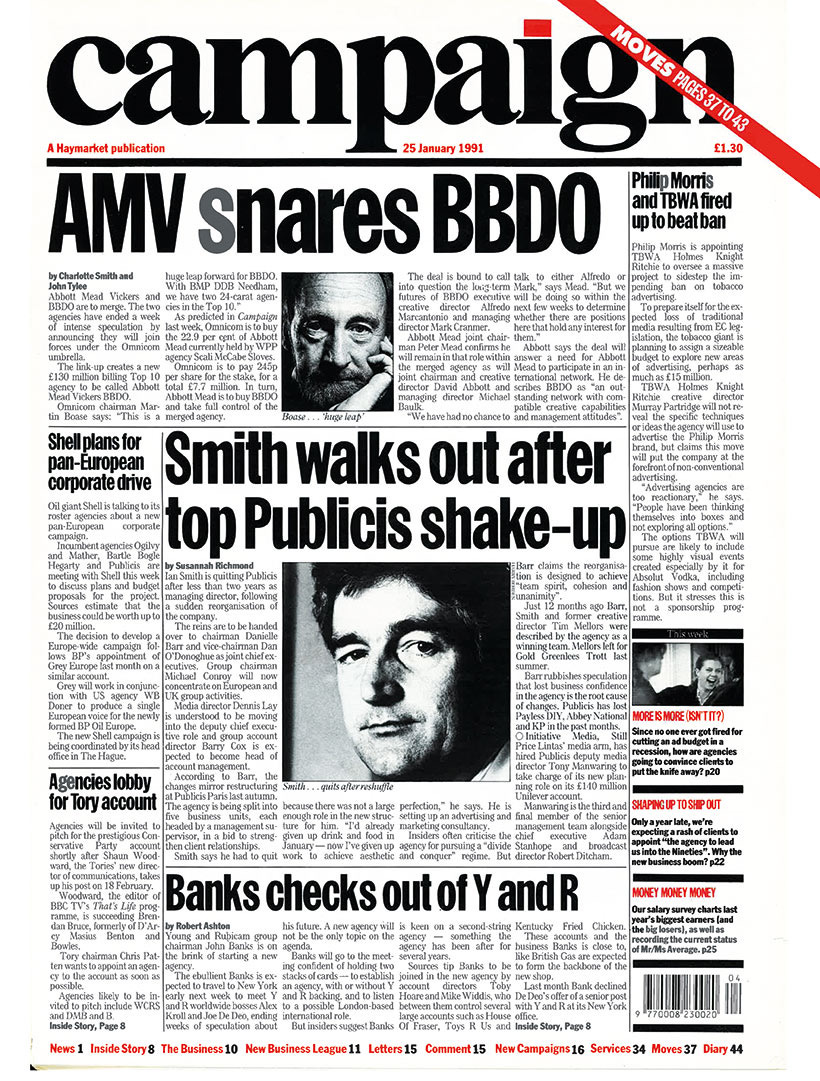
But I did know two things. I loved advertising. And there were these magazines in the library called Marketing and Campaign.
I’d read them cover to cover. Studied the campaigns. Admired the design. Loved the stories. Everything about them spoke to me in a way that the careers service never managed. And somewhere in my beautifully naive 21-year-old brain, a thought formed: if I could work on these magazines, maybe I’d learn the industry from the inside. Meet people. Build a network I didn’t have. Find a way in.
It wasn’t a strategy. It was instinct. But it got me to Haymarket Publishing, which is where the whole thing started.
III. The Mitre Pub and the Classified Section
My first role at Haymarket was on the recruitment section of Campaign, a department called Moves. Basically the classifieds. Not glamorous. Not prestigious. But I was in the building, and that was everything.
I was decent at selling. More than decent, actually. I worked my way up to the display team. Campaign’s office at Lancaster Gate was, and there’s no polite way to say this, quite the boys’ club. But I loved it. I loved the energy, the stories being broken, the people walking through. I learned more about advertising in those corridors than any lecture theatre had managed.
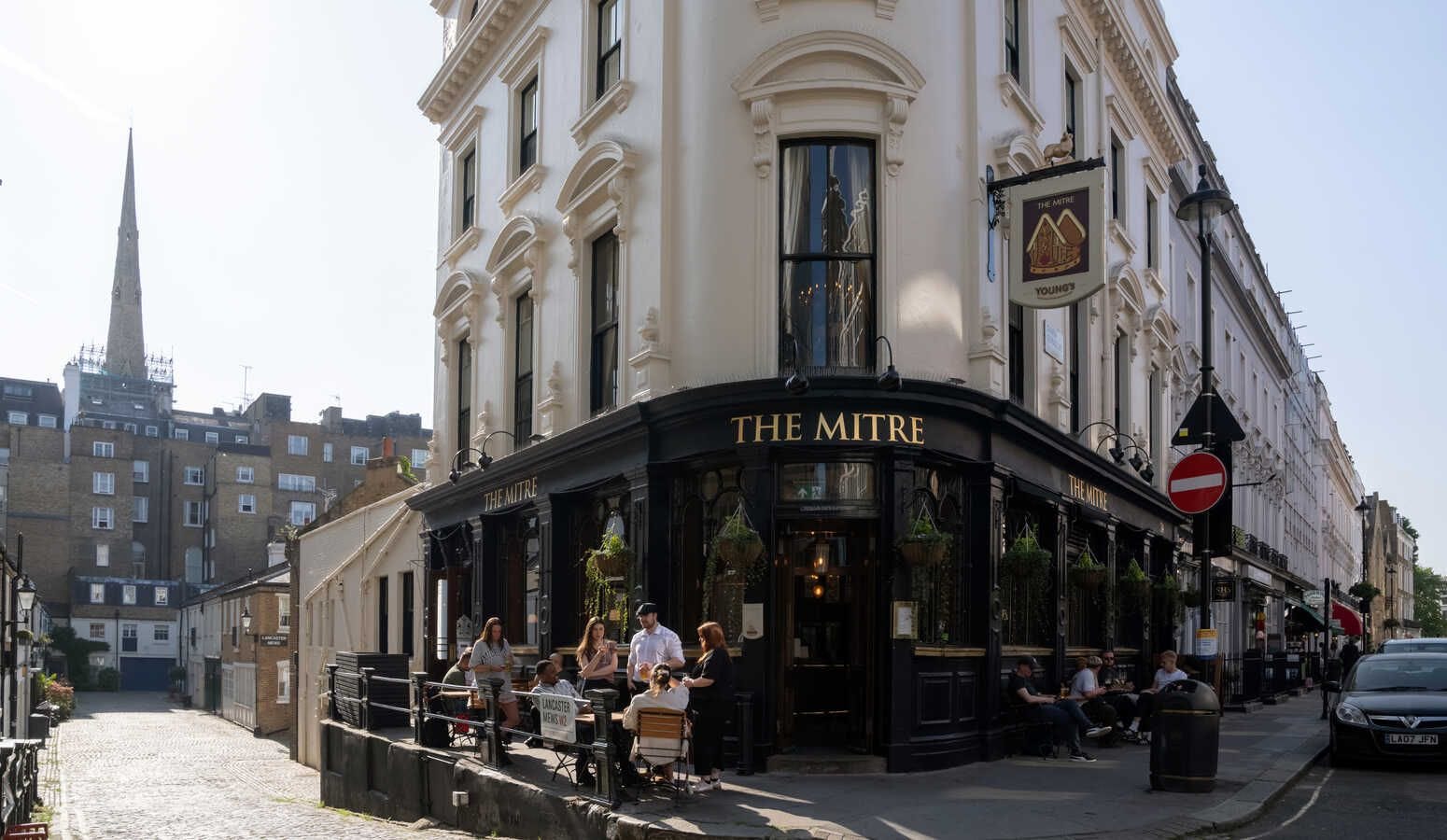
I also spent my entire salary at the Mitre pub in Lancaster Gate - just a stones throw from the Haymarket office, which was problematic given I was earning ten grand a year and living in London during a recession. You don’t need a calculator to know those numbers don’t work.
So when Teletext offered me a job as a sales admin girl with a 50% pay rise, I hopped, skippity-jumped at it. As you would.
IV. The Squiggle Begins
Eight years later, I was Managing Director of Teletext. From admin girl to MD. Not a straight line. More of what the wonderful Sarah Ellis and Helen Tupper would later coin a “squiggly career.” (Massive congratulations to them, by the way, on their latest book - Learn Like A Lobster - hitting number one on The Sunday Times bestseller list this weekend. What an achievement.)


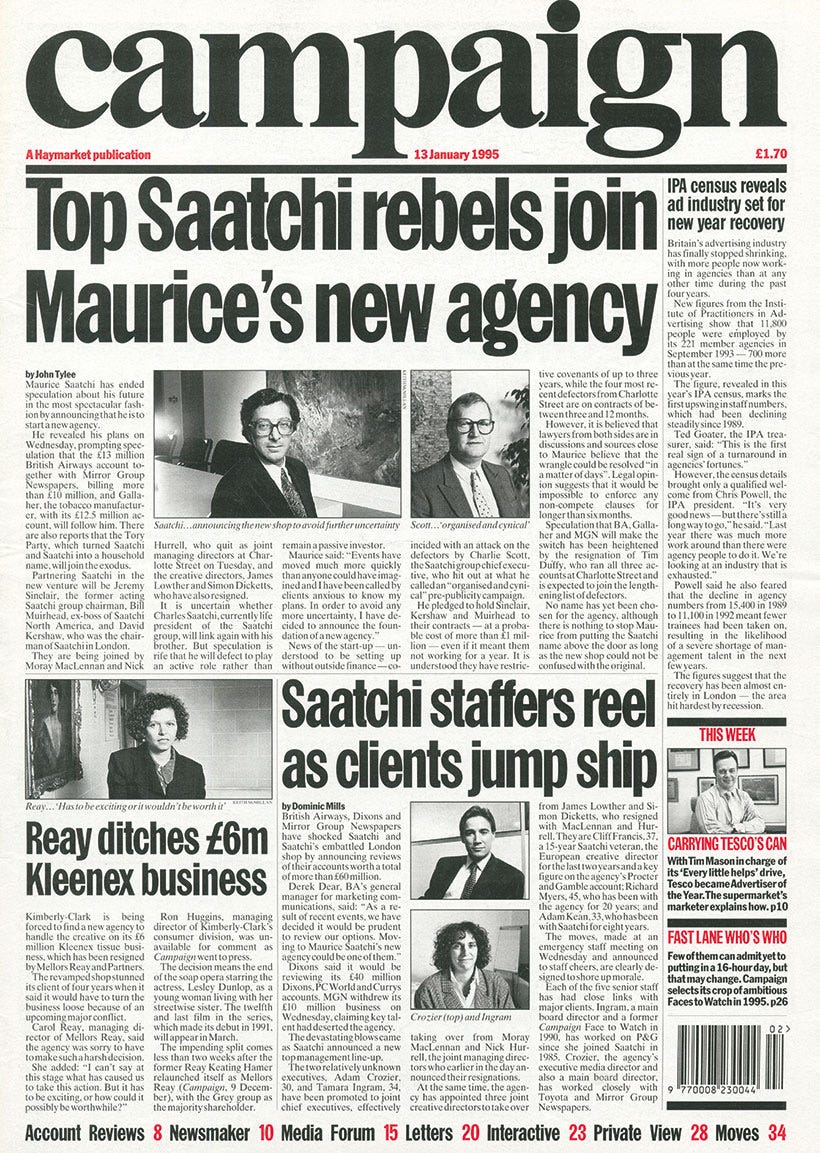
Throughout those years at Teletext, Campaign magazine remained a constant. It was where I learned about new technology, about who was shaping the industry, about which agencies were winning and why. I’d study the front pages, watching them evolve from that classic shot you always used to see: four men in suits, photographed from below at the bottom of a staircase, looking like they were about to announce a hostile takeover of a mid-range accountancy firm.
Early recognition came, but tentatively. I made the Media Week 30 Under 30 list as a “hot-shot media girl” working in a medium that, to be perfectly honest, most people didn’t give a moment’s thought to. Teletext wasn’t sexy, but it was a significant part of the UK economy, and that listing felt like a small crack in a door I wasn’t sure was open to people like me.
Because here’s the thing about recognition when you’ve spent your early career trying to hide. When you’ve been conditioned to blend in, to not take up space, to question whether you’re worthy of attention: you don’t seek it. You don’t even think it’s possible. You just keep your head down and do the work.
V. The Reset
Then life did what life does. I had twins at the end of 2008, took nearly a year out, and came back to a world that had completely rearranged itself.
We hadn’t just had the dot-com crash. Social media was now a reality. Facebook ads existed. The analogue business I’d built my career in had either disappeared entirely or mutated into something digital and unrecognisable. Some of the companies I’d worked with had simply ceased to exist.
And there I was, at the cusp of yet another twist in the squiggle. What did I do? I went back to the trade press. Back to Campaign, to Marketing Week, to New Digital Age. Back to the titles that had been my compass since the library. I read everything. Who was hiring. Who wasn’t. Which businesses were thriving. What I could glean about company cultures and the people running them.
If you’re a woman over 40 who has ever had to rebuild after a career break, you know this drill. The world doesn’t pause while you’re away. It sprints. And when you come back, the trade press isn’t just nice to have. It’s your map.
VI. The Winning Streak
The squiggle took me next to a digital agency called I Spy Marketing, working with Jim Brigden, Chris Whitelaw, Nick Jones and a whole host of brilliant people who became fast friends. We grew that business, sold it to Aegis/Dentsu, became part of iProspect, and went on an absolute new business tear.
New friends made: Ben Wood, Mark Fagan, and others. A pitch team that included the formidable Tracey de Groose and Matthew Hook. We won. A lot.
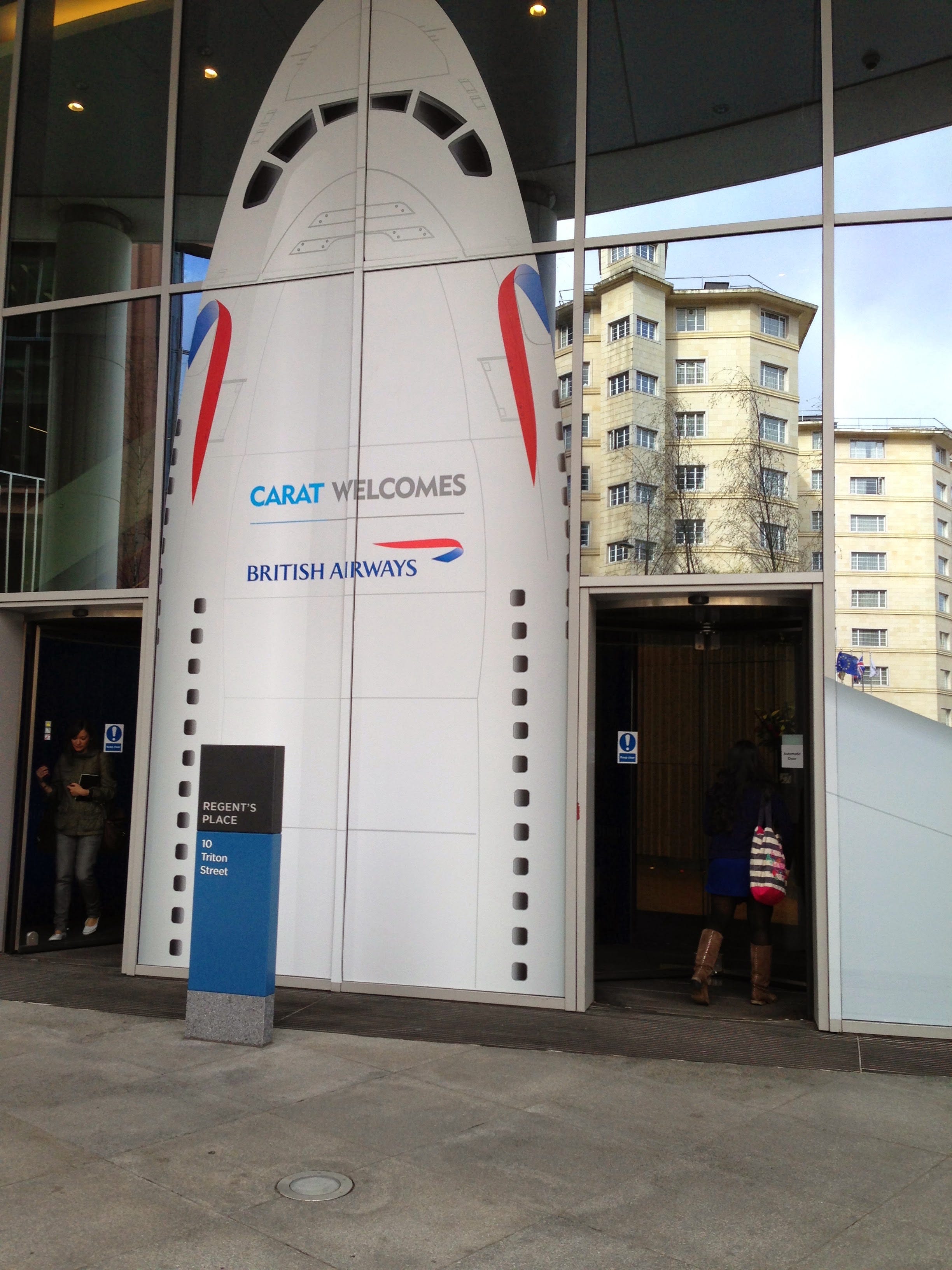
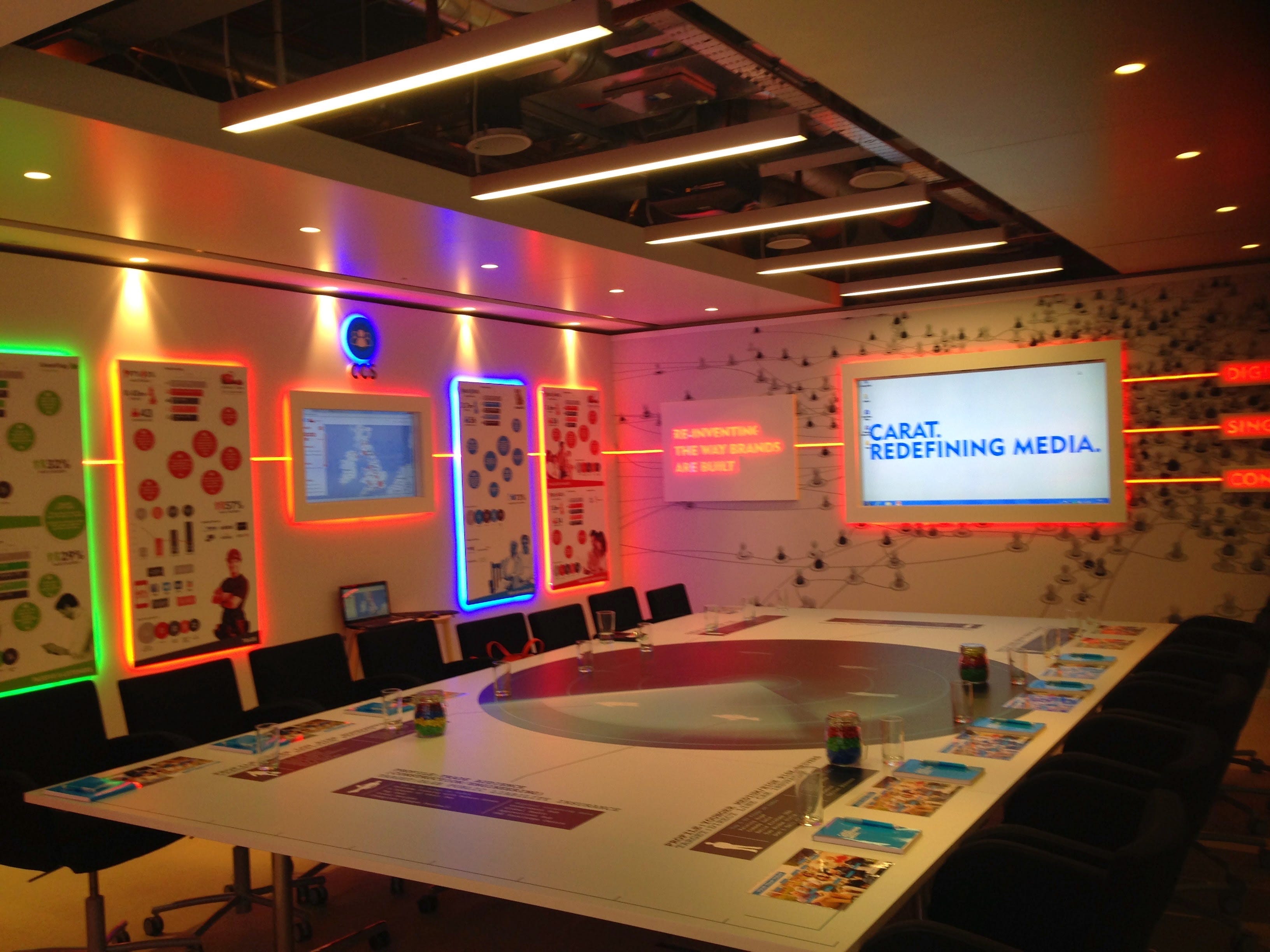
My network expanded. I was learning constantly. And I was always full of pride to see the coverage in Campaign, to attend award ceremonies where we’d pick up gongs for the campaigns we were running and the results we were delivering.
But still. Still. I was a pretty anonymous character. Known in the rooms I was in, invisible in the ones I wasn’t.
VII. The Google Years
Google had, at the time, an interesting relationship with trade press. By “interesting” I mean “basically non-existent.” PR was reactive, focused on big consumer and policy stories. Trade titles were there for product launches and not much else. People stories? Not really their thing.
My initial role was to build deep relationships with the industry, to land products like YouTube as a serious commercial entity, to help businesses understand what Google’s technology could do for them. And I knew, from twenty years of reading Campaign in libraries and pubs and on trains, how important the trade press was to scaling a message across an industry.
Sometimes it sounds bizarre, working for one of the biggest technology companies on the planet and still believing that relationships are everything. But they are. They really are.
As I did work that started to get attention, that broke ground, that was different, the trade titles took notice. Not just because I worked at Google, although let’s not pretend the badge didn’t open doors. It absolutely did. But it’s what you do when you walk through the door that counts.


And that’s where personal brand comes in. Not personal brand in the cringeworthy, LinkedIn-influencer sense of the word. I mean something much simpler and much harder: being understood. Being consistent in how your values show up. Being the person who turns up, who speaks up, who challenges things that aren’t right, including the publications themselves.
VIII. The DEI Panel at the End of the Day
Let me tell you a story about a Campaign event. Because this is where things get properly interesting.
I’d been invited to speak. Brilliant. Except, as had become wearyingly familiar, I hadn’t been invited to speak about marketing. I’d been invited to speak about diversity. Despite being, by that stage, a genuinely celebrated marketeer with a track record of building brands and winning business, the invitation was to sit on a DEI panel.
And not just any DEI panel. The DEI panel. Scheduled at the end of the day. After everyone had already heard the “real” content. The most diverse speakers of the entire event, all lumped together for the final session, by which point the audience’s interest had thinned out like a last-orders crowd.
I cared deeply about changing the landscape of my industry. If that meant talking about DEI more than marketing, so be it. I would do it. But the frustration was real. And it was Lindsay Clay who, never one to hold back, pointed out from the audience that maybe, just maybe, they should consider inviting me to speak about marketing.
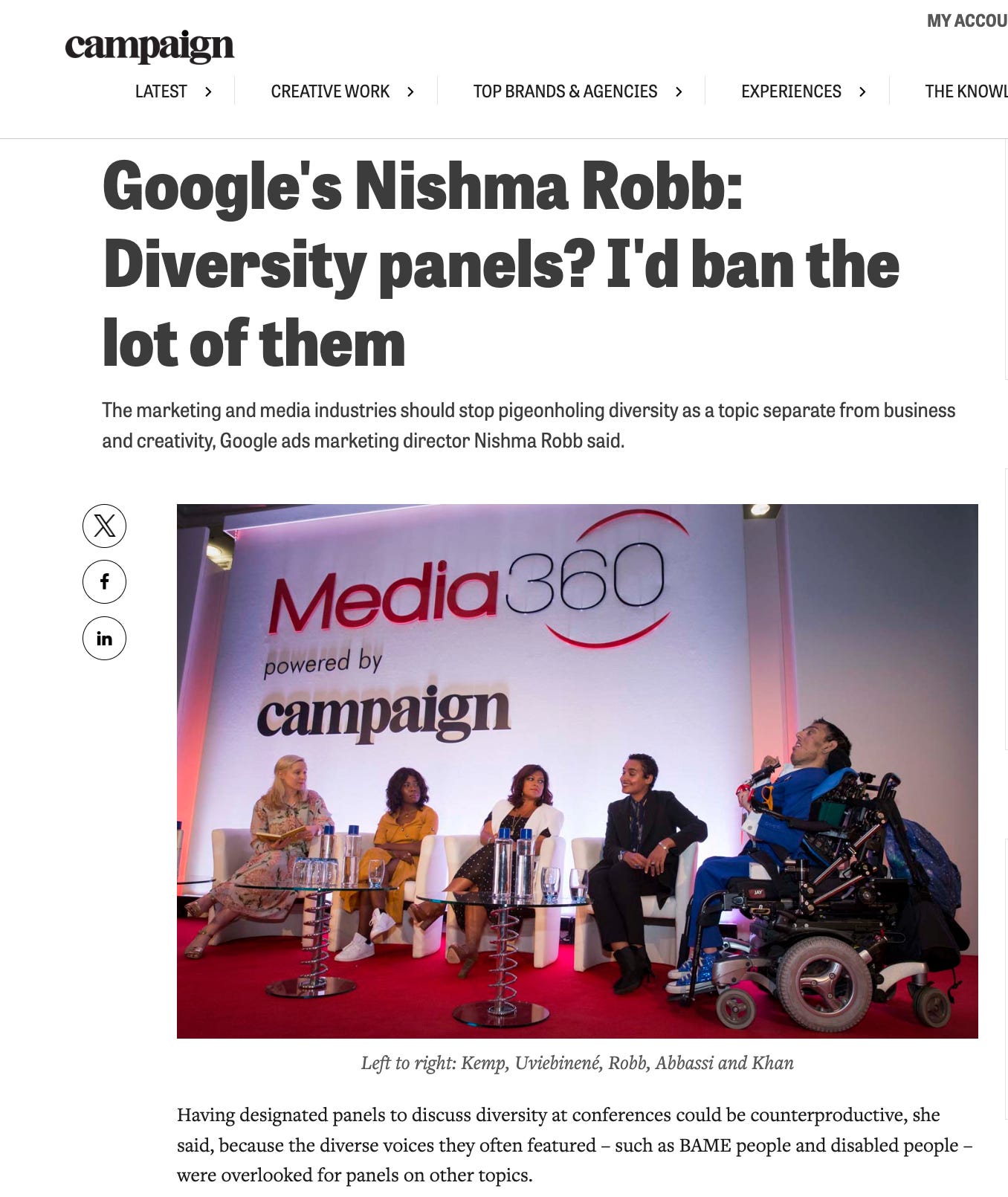
Campaign took it well, to their credit. They weren’t offended. They weren’t a lone wolf in programming diversity issues as a footnote. But something shifted. Whether it was changing personnel, the broader cultural moment, or just the sound of a penny finally dropping, Campaign became genuinely curious. They stopped chasing only the big, obvious stories and the big, well-known names. They started looking for different people, different types of innovation, different stories. They wanted to show that the industry was more varied than its front pages had historically suggested.
It was wonderful to see members of organisations like WACL, MEFA and Bloom being prominently featured. Not as tokens. As contributors.
IX. The Disappearing Act
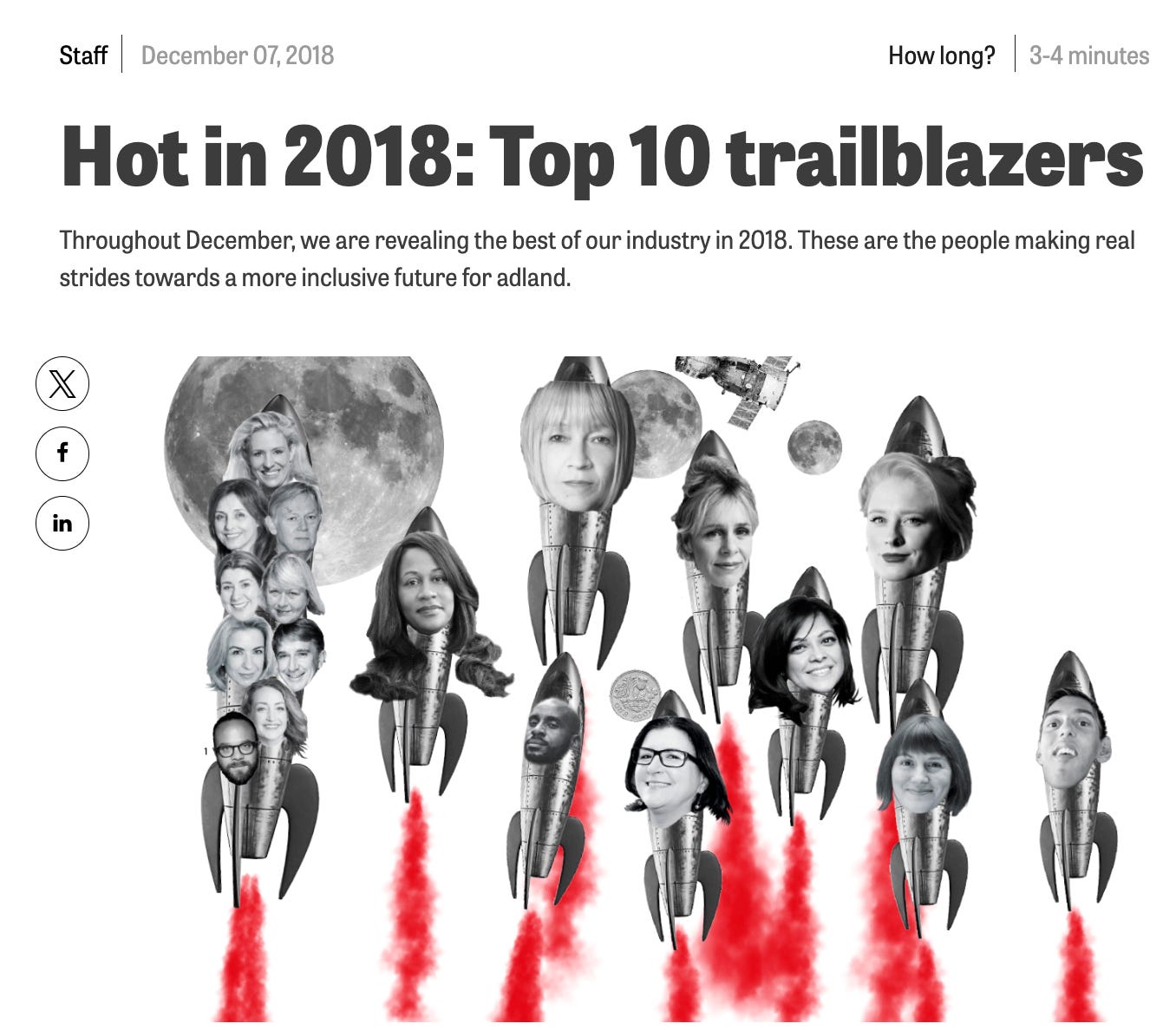
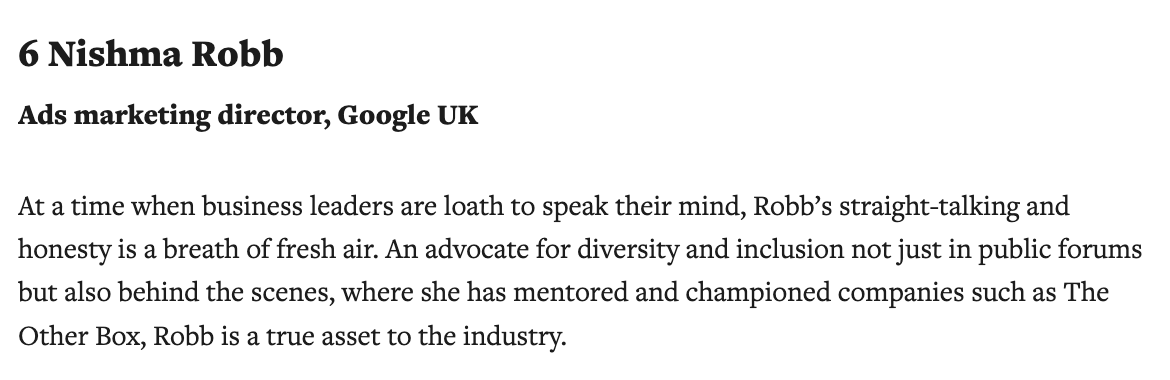
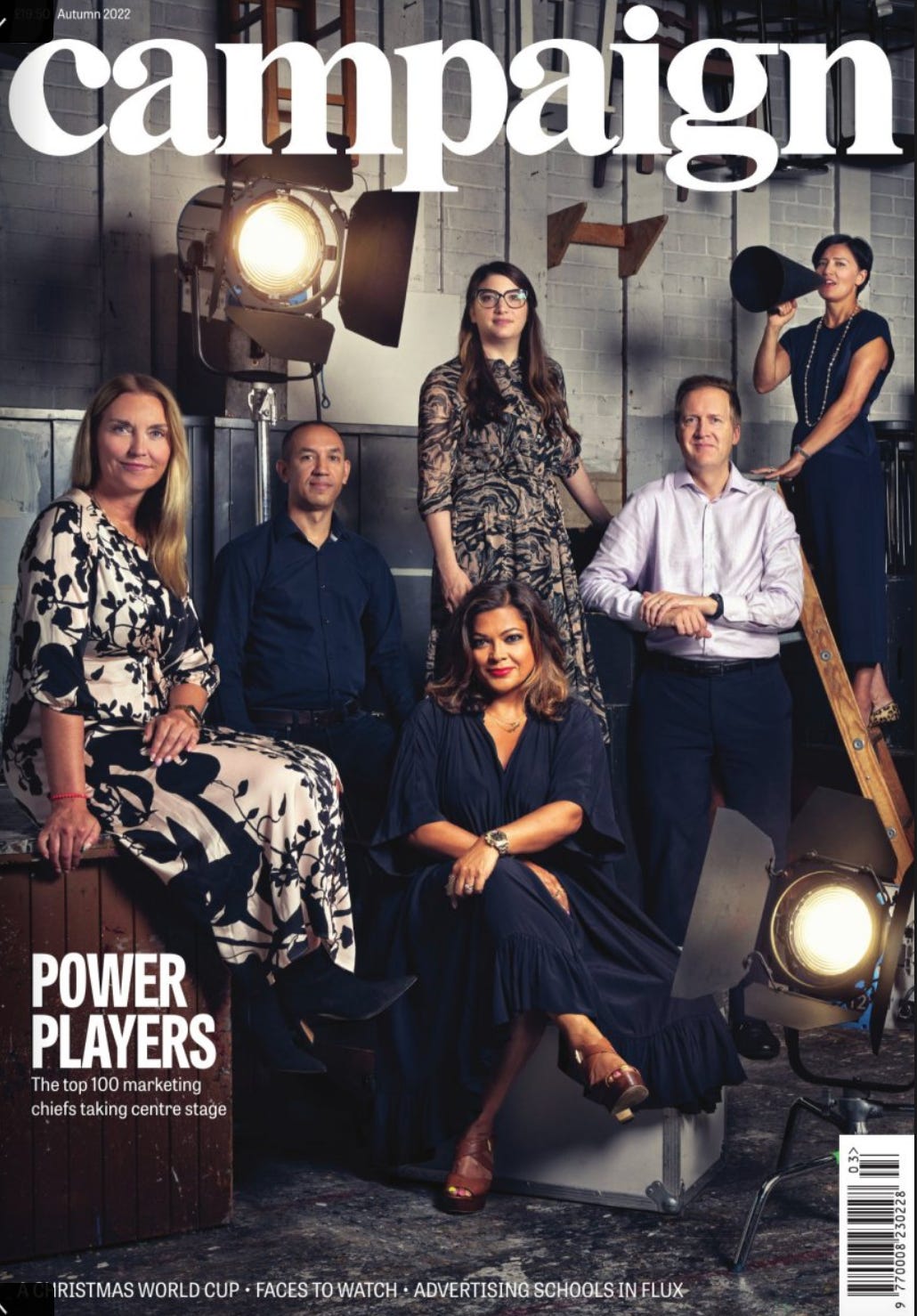
Over my years at Google, I made Campaign’s top ten trailblazers list a few times. The marketing Power List and Hall of Fame (and even made it onto cover!).


And I made the A-list repeatedly. But here’s something people don’t talk about enough: a place on the A-list isn’t a season ticket. You have to earn it. You have to be doing work that’s visible, impactful, disruptive. Contribution isn’t just about awards. It’s about showing up.
And for a few years, I stopped showing up. Or rather, the work I was doing stopped being directly tied to the ad industry in the way it had been before. I went a bit quiet. I disappeared from the list.
The A-list was never the goal. It was recognition that arrived when you were doing something worthy of attention. When you stopped, it stopped. That’s exactly as it should be.
X. The Bit Where Nobody Calls
Two years ago, I left Google. And I’ll tell you what happens when you leave a big company after a long time, because someone needs to say it out loud.
A lot of people who used to talk to you stop talking to you. Not because they’re bad people. Because they were talking to your job title. They were talking to the logo. They were having a conversation with the access you represented, and when the access went, so did they.
This is not a complaint. It’s physics. And it’s useful information if you’re about to make the same leap.
But equally. The people who continue to be your friends, your supporters, your collaborators, your fellow mischief-makers? They remain. And they’re the ones who matter.
I see more and more people making this shift. Through redundancy, through reinvention, through sheer frustration, through a quiet realisation that the thing they thought they wanted has changed shape. What we once defined as “a big job at a big company” has shifted. The old markers of success don’t quite map onto the new terrain.
XI. Recognition in the Trenches
Which brings me back to the list.
I am building new things.
Unmissable - an advisory for founders, leaders and brands that want more trust and growth via strong brands.
Glittersphere - a community for women who are done being overlooked.
HERA Media - the UK’s first female-led video podcast network.
A speaking career.
A rebellion, if you want to call it that.
It is terrifying. The identity shift alone could fill a therapy session or twelve. You go from being Someone at Somewhere to being someone building something that doesn’t have a name anyone recognises yet. The trenches are not glamorous. They are full of spreadsheets and self-doubt and Tuesday afternoons where you genuinely wonder if anyone is paying attention.
And that is exactly when recognition matters most.
Not the recognition you get when you’re winning. That’s lovely, but it’s easy. The recognition that counts is the kind that arrives when you’re in the messy middle. When you’re unproven. When the thing you’re building hasn’t landed yet but you’re showing up anyway. When the work is hard and unglamorous and you’re not sure it’s the right thing to do.
That’s when a friendly face, a word of encouragement, a nod from the industry that says “we see you, we see what you’re doing, and we think it matters” can be the difference between carrying on and quietly giving up.
So thank you, Campaign, (Maisie, Gideon, Gemma, Yasmin) for putting me back on the A-list. Not because of ego. Because of timing. Because you recognised that what I’m building is different, difficult, unproven, and disruptive.
And because you reminded me that my values haven’t changed since 1994. They’ve sharpened, they’ve focused, but I’m still the rebellious misfit I always was.
XII. A Note to Those Who Decide Who Gets Seen
I’ve poured over this year’s A-list. I’ve read the entries, enjoyed the brilliant quips. And I notice something. These aren’t just people from the biggest and sexiest companies. They’re people who have kept their heads above the parapet. People who hold roles where they can have genuine influence. Disruptors, innovators, makers, pioneers, rebels. The kind of people whose values stand the test of time, especially in a world that appears to have lost its mind.
We live in an era that seems to care only about the opinions of a few obscenely powerful people, an era that manufactures fear and amplifies hate. Against that backdrop, the work of spotlighting leaders and founders who have been overlooked or underestimated isn’t just nice. It’s necessary.
I am proud that organisations like the Marketing Society, The Marketing Academy and WACL and so many other businesses are genuinely progressive in who they platform.
I am proud that the wonderful Tom Knox chose me a few years ago to be President of the History of Advertising Trust, a title held by some of the greatest in our industry, and a role that I take deeply seriously for an industry that I care so deeply about. I really do love advertising.
But there are still institutions in our industry that remain stubbornly fixed. Definitions of influence and power that haven’t evolved. Policies that, if left unchallenged, will make those institutions obsolete. History should be a guide and an anchor as we shape what comes next, not a fortress to hide in.
To those industry bodies and publishers and organisations that have the power to confer recognition: look wider.
Look differently. Look for talent in the places you haven’t thought to check. Because the next generation of leaders might not be where you expect to find them.
They might be in a spare bedroom, or at the kitchen table, or in shared office-space, building something from nothing, wondering if anyone’s watching.
Someone should be.
If you enjoyed reading this and any of it resonated - because you’re building or wanting to be recognised or want to recognise someone…please share.
To ensure you receive my future stories and scribbles - please subscribe. It’s FREE and it would mean a lot to me to have your support.
Also let me know your thoughts or comments on this or any other feeeback or questions. Comments and messages are definitely my love language!